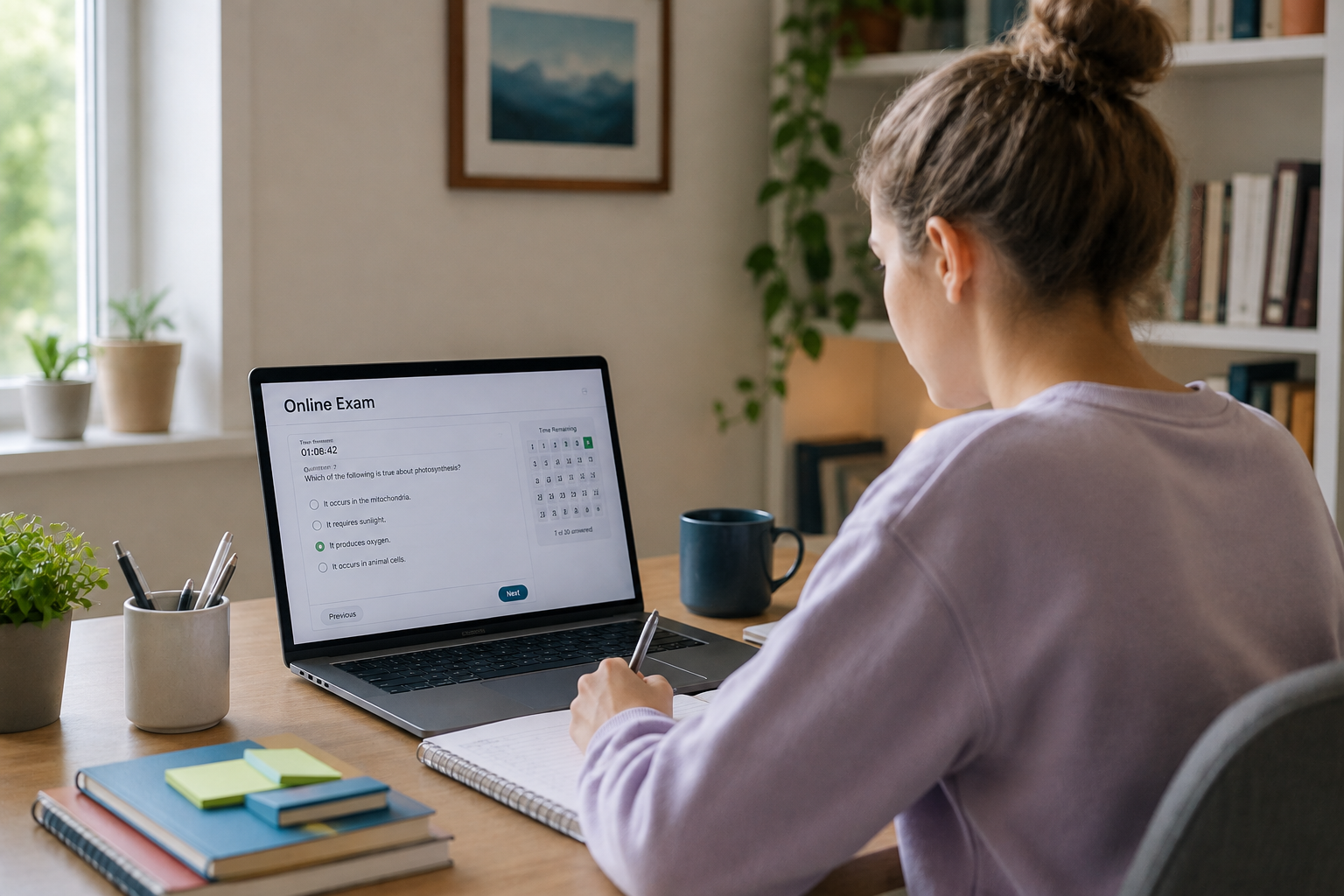
If you are considering studying online, you may feel comfortable with the idea of digital lessons, tutor support and flexible study schedules. Even so, one question often creates uncertainty: how exactly do exams work when your course is studied remotely?
It is an important question, and understanding the answer can help remove a great deal of uncertainty before you enrol. While learning online has become increasingly common, assessment methods can vary depending on the qualification, course provider and awarding organisation.
The reassuring news is that online exams are usually much more structured and straightforward than many learners expect.
Are all online exams taken from home?
Not always. One of the biggest misconceptions about online study is that the entire qualification is completed remotely. In reality, the assessment process depends heavily on the type of qualification you are studying.
For many regulated qualifications, especially GCSEs and A-levels, final exams are still often completed in person at an approved exam centre. This helps ensure fairness, security and consistent assessment standards across all learners.
In other cases, particularly for certain vocational or professional qualifications, assessments may be completed remotely using secure digital systems. The exam format depends on the qualification rather than simply whether the course itself is studied online.
What is remote invigilation?
Some online assessments are supervised using a process called remote invigilation. Remote invigilation allows learners to sit exams from home while being monitored through secure software and webcam technology. During the exam, systems may verify identity, monitor screen activity and record the testing environment to help maintain exam integrity.
Exam providers such as Pearson have increasingly adopted secure digital assessment methods for certain qualifications and professional certifications. The purpose of remote invigilation is to replicate the security of a traditional exam setting while allowing greater flexibility for learners.
How is identity verified?
Identity verification is an important part of online assessment. Before an exam begins, learners are usually asked to confirm their identity using photographic identification such as a passport or driving licence. Some platforms may also ask candidates to scan their room or workspace using a webcam.
These security measures help ensure the registered learner is the person completing the assessment and that exam conditions remain fair for everyone. Although these checks may feel unfamiliar at first, they are designed to protect the qualification's credibility.
What equipment do you need?
The technical requirements for online exams are usually simple, but it is important to prepare in advance.
Most online exam systems require a reliable internet connection, a functioning webcam, a microphone and a suitable computer or laptop. Some platforms also require software installation before the exam date.
Many providers offer system checks before the assessment. Organisations such as JCQ also provide guidance around examination procedures and standards that help inform secure assessment practices.
Testing your equipment beforehand can significantly reduce stress on the day. Preparation matters just as much technically as it does academically.
Are online exams harder than traditional exams?
Usually, no, and many find them easier. The assessment itself is typically designed to measure the same knowledge and skills regardless of whether the exam is taken digitally or in person. The difficulty comes from the qualification, not the delivery method.
Some learners actually find online exams less stressful because they are already comfortable using digital tools. Others prefer traditional paper-based exams because they feel more familiar.
In most cases, the main challenge is adapting to the format rather than dealing with harder questions. Practice and familiarity often improve confidence quickly.
Can online exams be trusted?
Yes, when delivered through recognised providers and awarding bodies.
Security measures such as identity checks, remote invigilation and controlled exam systems help maintain standards and reduce the risk of malpractice. Regulated qualifications overseen by Ofqual must also meet clear quality and assessment standards.
For learners, this means a recognised qualification earned through online assessment can carry the same credibility as one completed through traditional examination methods. Trust comes from strong assessment design, not from the exam's physical location.
Final thoughts
So, how do online exams work? The answer depends on the qualification, but in most cases the process is clear, secure and carefully managed. Some exams are completed at approved centres, while others use remote invigilation to allow secure home assessment.
For many learners, online exams initially sound unfamiliar. Once you understand the process, however, they often feel far less intimidating than expected. With the right preparation and support, online assessment can be a practical and reliable part of modern education.