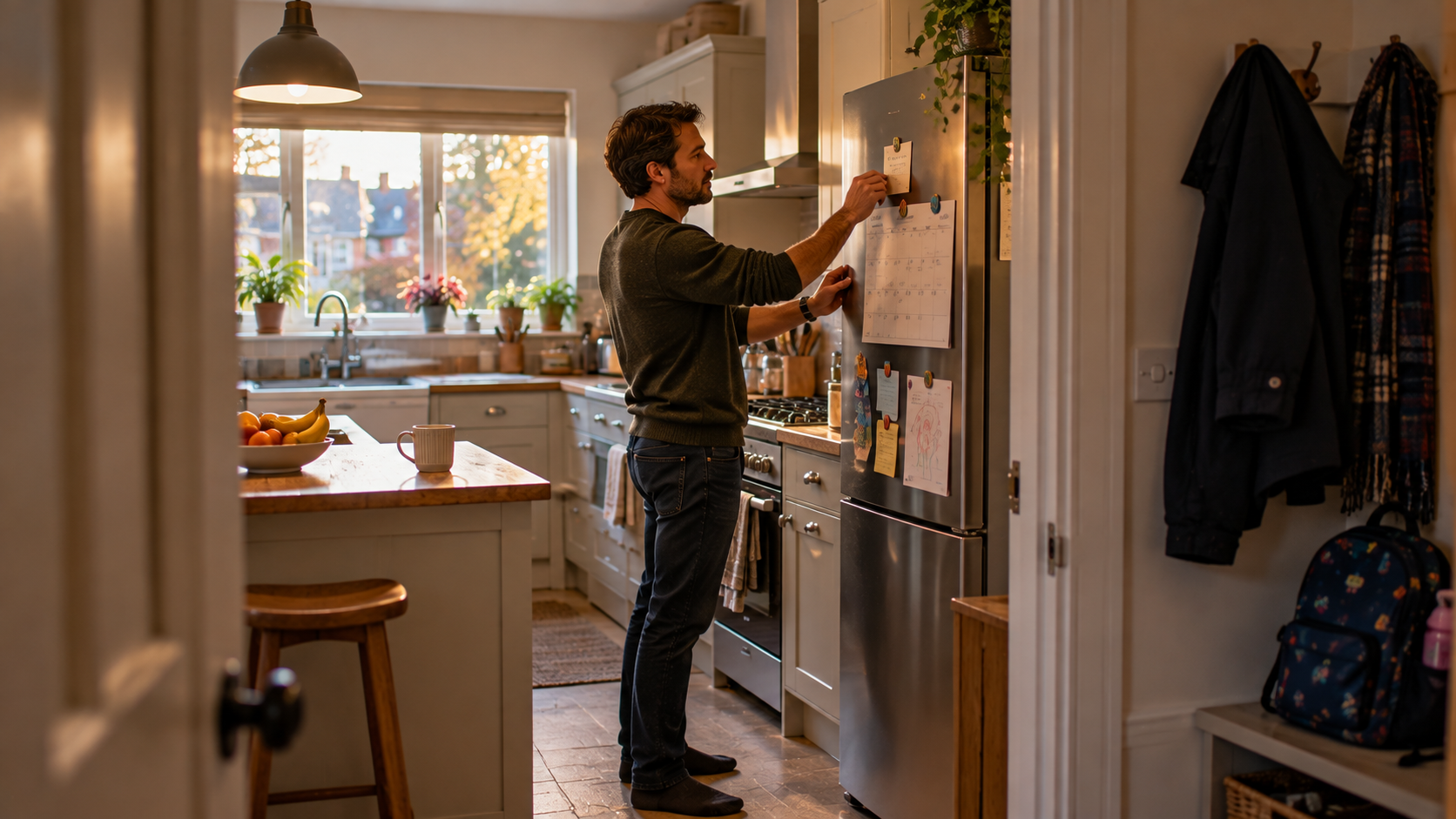
If you are wondering can adults take GCSEs online, the answer is yes. Adults can return to GCSE study at almost any stage of life, and online learning can offer a flexible way to prepare for a qualification without returning to a conventional school environment. For many learners, that means fitting GCSE study around work, children and responsibilities that simply did not exist when they were 16.
There are many reasons to return to GCSEs as an adult. You might need Maths or English for university, want to meet the requirements for a new job or training programme, or simply want to complete a qualification you did not achieve at school.
Whatever your reason, studying as an adult is different from studying as a teenager. You have more control over the decision, but usually more demands on your time too. Understanding how online GCSEs work, including examinations and course choices, can help you decide whether the route suits you.
Can adults take GCSEs online at any age?
There is no point at which you become "too old" to study a GCSE.
Adults return to education in their twenties, thirties, forties, fifties and beyond. A qualification does not become unavailable simply because you did not complete it during the conventional school years.
In fact, returning later can bring advantages. You may have a much clearer reason for studying and a better understanding of what you want the qualification to achieve.
The practical challenge is usually time rather than age.
A teenager may have most of the working week organised around education. An adult learner may fit the same subject around a full-time job, childcare, household responsibilities, and other commitments.
That is one reason online study can be attractive. It lets you organise much more of your learning around the rest of your life.
How do online GCSEs for adults work?
An online GCSE course provides the teaching materials needed to work through the subject remotely.
Rather than travelling to regular lessons, you access course content online and study from home or another suitable location. A structured course should take you through the relevant material in a logical order, with academic support available when you need help.
Depending on the course, you may complete activities and assignments as you progress. Tutor feedback can help you identify areas that need more work and develop the skills required for formal assessment.
The flexibility is in the learning process. The qualification itself still has assessment requirements that need to be met.
Adults considering online GCSE courses should therefore look at the complete journey, including course content, tutor support and examinations, rather than focusing only on the convenience of studying from home.
Can adults take GCSEs online completely from home?
You can complete much of the learning from home, but that does not necessarily mean every part of the qualification happens there.
Formal GCSE examinations normally need to be taken under appropriate examination conditions at an approved centre. Depending on the subject, there may also be other assessment requirements to consider.
This distinction matters because phrases such as "online GCSE" describe the method of study rather than replacing the qualification's assessment requirements.
Before enrolling, establish how the exams work. Find out whether you will need to arrange an examination centre yourself, whether your provider assists with this and what costs are involved.
Doing this at the beginning is much easier than discovering shortly before the examination that arrangements still need to be made.
Why do adults go back and take GCSEs?
For some adults, the reason is very specific.
A university course may require a particular grade in GCSE Maths or English. An apprenticeship, training programme or employer may also have qualification requirements that make returning to GCSE study worthwhile.
For others, the motivation is more personal. Perhaps school did not go well the first time around, circumstances interrupted education or a subject that once seemed irrelevant has become important years later.
Some learners simply want to prove to themselves that they can do it.
Our guide to studying GCSEs online as an adult explores some of these motivations and the practical considerations involved in returning to GCSE study later in life.
Your reason doesn't need to impress anyone else. It simply needs to matter enough to make the work worthwhile to you.
Can adults take GCSEs online if they failed them at school?
Yes. A previous result does not prevent you from trying again.
In fact, returning to a GCSE as an adult can feel very different from studying it at school. You are choosing to be there, often with a clear reason for wanting the qualification.
That does not mean a subject that was difficult at 16 will suddenly become effortless. You may need to rebuild knowledge that has not been used for years, particularly in Maths.
The difference is that you can approach those weaknesses deliberately.
If your previous result was disappointing, think about what made the subject difficult. Did you never understand foundational topics? Did you struggle with exams? Was attendance poor, or were other circumstances affecting your education at the time?
You are not required to repeat the same learning experience simply because you are studying the same qualification.
Do adults need GCSE Maths and English?
Maths and English are among the GCSEs adults most commonly return to because they can appear in entry requirements for further study and employment.
Whether you need them depends on what you want to do.
Check the actual requirements rather than assuming. If you are considering university, look at the entry criteria for the courses that interest you. If the qualification is for work, establish what the employer or professional route expects.
If you need Maths, an online GCSE Maths course can provide a structured route through the subject rather than trying to reconstruct the entire syllabus independently.
The same principle applies to English and other GCSE subjects. Start with the requirement, then choose the qualification that satisfies it.
Can adults take GCSEs online while working full time?
Yes, but this is where realistic planning becomes particularly important.
Online study can remove the need to attend a college at fixed times each week, which may make education much easier to combine with employment. It does not remove the hours needed to learn the material.
Think carefully about when those hours will happen.
If you finish work exhausted every evening, a plan to study for two hours after dinner five nights a week may not last long. Weekend mornings, an early session before work or a combination of shorter periods may suit you better.
Start with a routine you believe you can maintain during an ordinary busy week.
You can increase your study time later if necessary. Beginning with an unrealistic timetable and repeatedly failing to follow it can make a perfectly achievable GCSE feel much harder than it needs to be.
How long does an online GCSE take an adult to complete?
There is no single completion time that applies to every adult learner.
Your starting knowledge matters. Someone who narrowly missed the grade they need a few years ago is in a different position from somebody returning to Maths after twenty years.
The amount of weekly study time you have available also matters, as does the date of the examination series you intend to enter.
Our guide to how long it takes to complete a GCSE online looks at these factors in more detail.
Be cautious about choosing a completion date simply because it sounds fast. The goal is not to finish the course material as quickly as possible. It is to be properly prepared to achieve the result you need.
Can adults take GCSEs online without remembering anything from school?
You do not need to remember the entire subject before you begin.
A well-structured GCSE course should teach the relevant material rather than assuming that you can recall every lesson from school. If you have been away from education for a long time, some concepts may return surprisingly quickly while others feel completely unfamiliar.
That is normal.
Try not to interpret early difficulty as evidence that you are incapable of studying the subject. You may simply be encountering knowledge you have not used for many years.
At the same time, be prepared to spend more time on foundational topics when needed. In subjects such as Maths, later concepts can depend heavily on earlier skills.
There is nothing wrong with rebuilding those foundations. They are part of the course for a reason.
Is GCSE English difficult for adult learners?
English can present a different challenge from Maths.
Adults often use written communication every day, so it can be tempting to assume that GCSE English should automatically be straightforward. The qualification, however, assesses particular skills and requires you to demonstrate them in particular ways.
You may need to analyse texts, interpret language, compare material and produce different forms of writing under examination conditions.
An online GCSE English Language course can help you develop those assessment skills systematically rather than assuming everyday reading and writing experience will automatically translate into examination marks.
Adult experience can still be useful. You may have greater confidence expressing ideas or understanding different audiences than you did at school.
The key is learning how to apply those strengths to the qualification's requirements.
What if you are nervous about going back to education?
Returning to formal study can feel strange, particularly if your memories of school are not especially positive.
You may worry that everybody else will understand things faster, that you have forgotten how to study or that you are simply too old to be sitting an exam.
Those concerns can become smaller once the course begins.
Instead of thinking about the entire GCSE, concentrate on the topic you are currently learning. Instead of worrying about an exam months away, focus on understanding today's material.
Study skills can be rebuilt too. You may need to experiment with note-taking, revision and time management before discovering what works for you now.
The learner returning to education today is not the same person who sat in a classroom years ago. Your circumstances, motivation and experience have changed.
Do adult GCSE students sit the same exams?
If you are working towards the same GCSE qualification and specification, being an adult does not make the exam easier. That is important because the value of the qualification does not depend on your age. You should know which awarding organisation and specification your course follows and ensure that you are preparing for the correct assessments.
The Joint Council for Qualifications' information for private candidates provides guidance for learners entering examinations outside the school or college where they have been taught, including information about finding a centre.
Exam arrangements can take time, so do not treat them as an administrative detail to deal with at the last minute.
How do you choose the right online GCSE as an adult?
Begin with your reason for studying.
If a university has told you that you need GCSE Maths at a particular grade, your priority is straightforward. If you are studying for personal development, you have much more freedom to choose a subject that genuinely interests you.
Then investigate the course itself. Check the qualification, specification, tutor support, course access period and assessment arrangements. Make sure you understand which costs are included and which may be additional.
Consider your timetable as well. A course can be excellent and still be the wrong choice if your proposed completion date requires more weekly study than you can realistically provide. Choosing well at the beginning can remove a great deal of unnecessary difficulty later.
Can adults take GCSEs online and then progress to A-levels?
Yes. GCSE study can be the beginning of a longer return to education. An adult might complete GCSE Maths or English to satisfy an entry requirement, while another may take several GCSEs before progressing to Level 3 study.
If A-levels are part of your eventual plan, investigate any subject-specific entry requirements before deciding which GCSEs to take. You do not need to commit to an entire educational journey immediately. Successfully completing one qualification can help you decide whether you want to continue.
Online learning can make that progression more flexible because each stage can be organised around your circumstances rather than requiring you to return to full-time education.
Can adults take GCSEs online successfully?
Yes, but success still requires consistent work. Online courses can make education more accessible by giving you greater control over when and where you study. They cannot learn the material on your behalf.
Set aside regular study time, ask for help when something does not make sense and begin practising assessment skills well before the examination. Use the flexibility rather than allowing it to become endless postponement.
Adults often have busy lives, so some weeks will inevitably be disrupted. The important thing is being able to return to the routine afterwards rather than treating a missed session as evidence that the whole plan has failed.
Final thoughts
If you are asking can adults take GCSEs online, age is unlikely to be the obstacle. Adults can return to GCSE study for university, employment, further education or simply because completing the qualification matters to them.
Online learning can make that return considerably easier to organise, particularly when conventional classroom attendance does not fit around work or family life.
You will still need to understand the assessment arrangements, protect enough time for regular study and prepare properly for your exams. Some knowledge may need rebuilding if you have been away from education for years, and that is entirely manageable.
You do not have to recreate your experience of school. You are approaching the qualification at a different stage of life, for your own reasons and with a learning route that can be built around the life you have now.